Concerto Budapest returned to Dublin last night, only two years after their last impressive appearance, and once again proved its mettle. Under the direction of András Keller, who has led the ensemble since 2007, this century-old orchestra delivered a programme steeped in high-Romantic drama: two C minor masterpieces by Beethoven forming the backbone of the evening, framed by Tchaikovsky and Liszt symphonic poems. Review By Andrew Larkin on Bachtrack.com
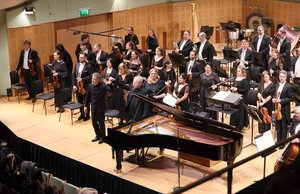
© Dublin National Concert Hall Mark Stedman
Concerto Budapest returned to Dublin last night, only two years after their last impressive appearance, and once again proved its mettle. Under the direction of András Keller, who has led the ensemble since 2007, this century-old orchestra delivered a programme steeped in high-Romantic drama: two C minor masterpieces by Beethoven forming the backbone of the evening, framed by Tchaikovsky and Liszt symphonic poems.
From the ominous opening brass and glowing cellos in Tchaikovsky’s Francesca da Rimini, Keller helped create a miasma of despair, worthy of Dante’s doomed lovers. The strings exchanged rapid, razor-edged figures with the woodwind and brass, their chromatic surges whipping up a convincing sense of terror. Yet amid the violence came moments of delicacy – the plaintive, beautifully shaped clarinet solo for Francesca, and a dancing, flirtatious flicker from the flute – proof that Keller could balance the work’s lurid intensity with moments of tender pathos.
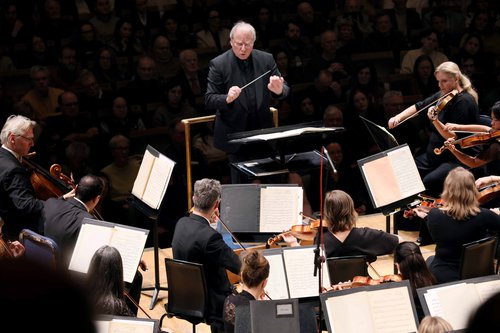
András Keller © Dublin National Concert Hall Mark Stedman
Paul Lewis then joined the orchestra for Beethoven’s Third Piano Concerto, attacking the rising scales with near-savage drive while the later staccato arpeggios possessed a limpid quality like stones skimming across still water. The second theme, though poised, felt a shade too plain, wanting a little more expressive warmth. Keller, meanwhile, kept the orchestral texture lean and almost classical in outline, though Lewis tore free of restraint in the cadenza, attacking it with a tightly coiled ferocity.
Lewis shaped each phrase of the second movement with an architectural beauty that was matched by sumptuous strings. Here the hushed pianissimo arpeggios provided a backdrop to the soaring melody above. The Rondo hurtled forward with nervous energy. Some of the rapid triplet passagework lost clarity and on at least one occasion the orchestra was a little disjointed but overall there was no doubting the terrific panache and verve with which both Keller and Lewis imbued this finale.
Liszt’s Les Préludes opened the second half in a blaze of colour. Keller’s attention to detail was striking: violin lines buoyed by feather-light woodwind staccato, woodwind phrases shaped with particular finesse, and textures that never grew muddy even as Liszt’s rhetoric swelled towards its triumphant climaxes. The brass blazed, the percussion thundered, yet the music retained a clear narrative arc.
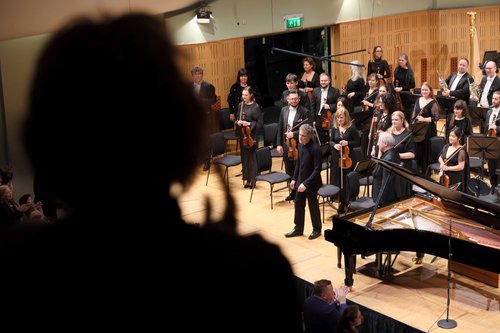
Paul Lewis © Dublin National Concert Hall Mark Stedman
Just as in Cana, the finest wine was kept to last and Beethoven’s Fifth Symphony justifiably brought the house down. This was a bold, high-voltage reading, Keller unafraid to push tempos to the brink. The Fate motif exploded with visceral force and the first movement crackled with urgency. Momentum gathered steadily through the Scherzo, the transition into the finale delivered with a sweeping grandeur. The coda was taken at an exhilarating pace – thrillingly fast but just within the bounds of control. This was Beethoven with the brakes off, and under Keller’s bold stewardship it brought the evening to a jubilant, breathless close.
Read the original review on Bachtrack's website, click HERE!