BARTÓK: Cantata profana, Sz. 94, BB 100
R. STRAUSS: Metamorphosen
BARTÓK: Piano Concerto No. 3 in E major (Sz. 119, BB 127) R. STRAUSS: Suite from Der Rosenkavalier, Op. 59
Dénes Várjon piano
Attila Fekete tenor, Miklós Sebestyén baritone, Kodály Choir Debrecen (choir director: Zoltán Kocsis-Holper), The New Liszt Ferenc Chamber Choir (choir master: Péter Mészáros)
Conductor: András Keller
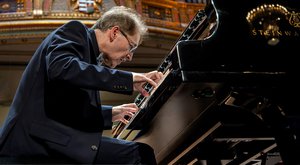
Concerto Budapest’s season-opening concert, conducted by András Keller in the Great Hall of the Liszt Academy, features two compositions by two 20th-century composers. The first is Richard Strauss’s Metamorphosen, a work written in 1945 and originally titled Trauer über München (‘Mourning for Munich’), as it laments the destruction of German culture and the bombing of the composer’s native city.
This deeply personal work, which some have termed the saddest piece of music in the musical literature, is a farewell to German Romanticism. Its title refers to the fact that the endlessly flowing polyphony of its single movement is composed of the interconnection, decay, and rebirth of tiny motifs and melodic fragments of various lengths. – Cantata profana, completed in 1930, is one of the most personal and important works in Bartók’s oeuvre. The subtitle of the choral work, written for tenor and baritone voices and orchestra or piano, is The Nine Enchanted Stags. The text, based on the words of a Romanian carol related to the Christmas holiday season and translated into Hungarian by Bartók, is a tale of boys who flee society and become stags, yearning for the purity of the natural world. Singing the vocal solo parts will be Attila Fekete and Miklós Sebestyén. – Bartók wrote his Piano Concerto No. 3, which is more lyrical, clearer and more cheerful than the first two, when he was already gravely ill, with death looming before him, and dedicated it to his pianist wife. This ‘final will and testament’ resolves the conflicts of his entire oeuvre with a peculiar, new harmony.
As the soloist for the concerto, this time we will get to hear Kossuth Prize-winning pianist Dénes Várjon, a frequent guest of Concerto Budapest’s. – Richard Strauss’s musical comedy, Der Rosenkavalier, first premiered in 1911, was a huge and instant success wherever it was performed. The composer’s unwavering enthusiasm for the work may have been what later, in 1945, inspired him to compose an independent orchestral suite from it that provides an impressive medley of the piece’s musical themes.