Clive Peacock reviews Concerto Budapest Symphony Orchestra at Warwick Arts Centre
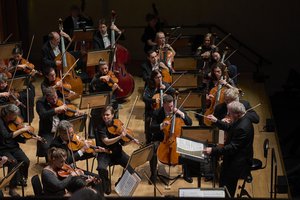
Many in the audience retained vivid memories of an outstanding performance of Shostakovich’s Seventh Symphony by the City of Birmingham Youth Orchestra last month. The opportunity to hear the Concerto Budapest Symphony Orchestra’s interpretation of his Ninth Symphony helped swell the audience. Male players dressed in white tie and tails and female in black gowns graced the vast platform with over 100 players, delivering remarkable crisp brass, exquisite string and invigorating wind playing. Their varied programme included Shostakovich, Liszt, Beethoven and Tchaikovsky.
Shostakovich’s Seventh (Leningrad) and Eighth Symphony – considered by many to be a more effective response to the experience of war – were the first two parts of what was expected to be a trilogy of war symphonies. He promised a large-scale work, possibly with a vast chorus, but his heart was not in this project and he abandoned the plan. Symphony No 9 was composed quickly in 1945 and premièred in Leningrad in the November. In his own words, the work is a “merry little piece” and maybe frivolous, particularly in the opening movement when a piercing piccolo chirps over a low trombone and percussion. In short, the Ninth is very different but was handsomely played with attractive bassoon and clarinet solos driven at pace by a most effective percussion section.
This Budapest team presented a magnificent trombone fanfare to announce Liszt’s Les Préludes with the horn colleagues adding to the excitement, the work providing a thrilling start to this diverse programme.
Paul Lewis is a foremost interpreter of the works of Beethoven and Schubert and duly delivered one of those delightfully subtle and sensitive performances of Beethoven’s Piano Concerto No 3 in C Minor, devoid of any irritating mannerisms. With a sparkling cadenza in the first movement, pleasing lyricism of the simple melodies in the middle one and a stimulating climax, this was Lewis at his best. Conductor András Keller clearly enjoyed this performance and delighted the audience with two encores of Hungarian dances by Bartók and Brahms.
The performance took place on Tuesday December 2.